
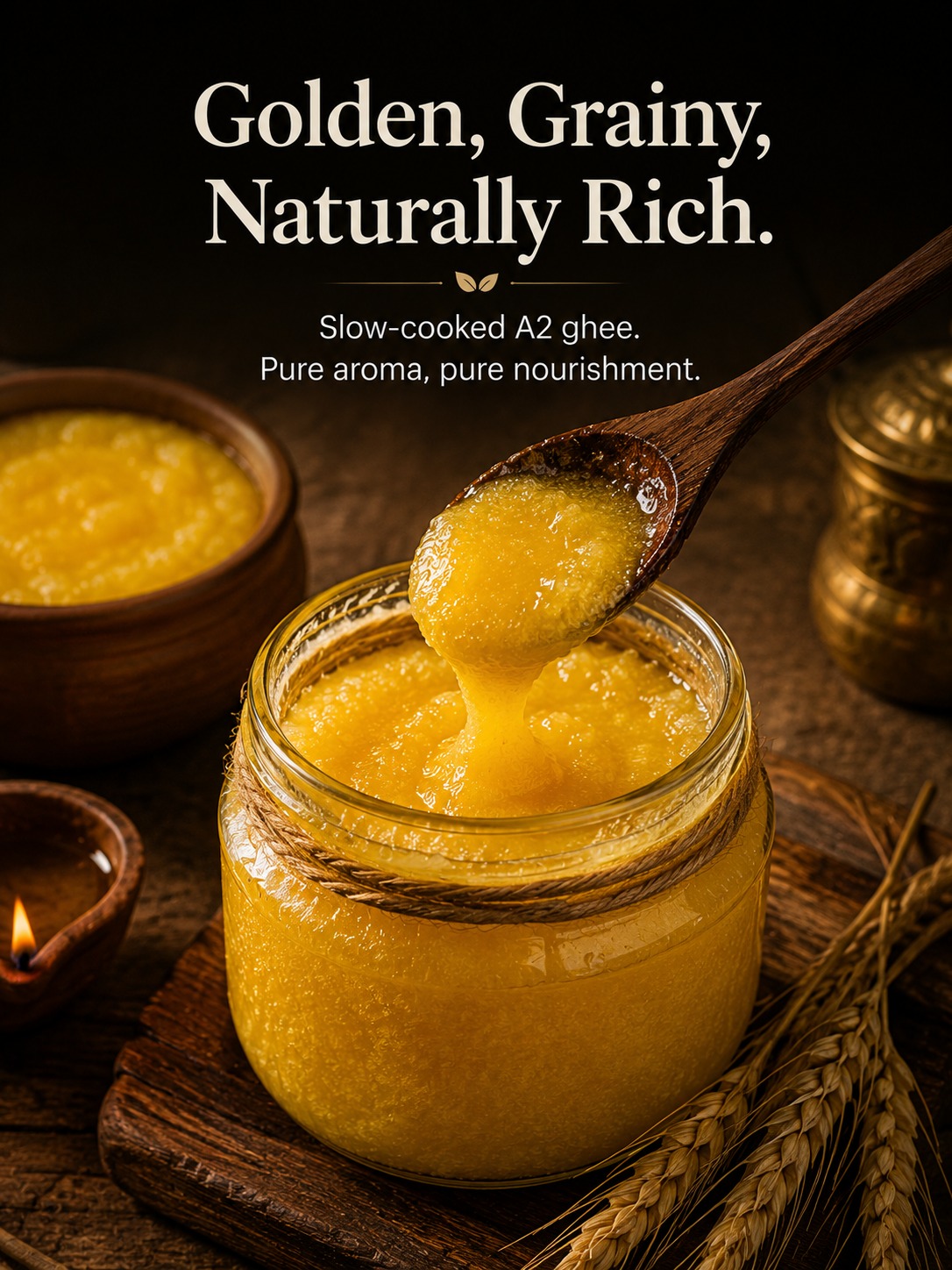
Why cow ghee is golden and buffalo ghee is white, how they differ in taste and texture, and which one to use for daily cooking, sweets and puja.
Walk into any Indian ghee shop and you'll usually be asked: cow or buffalo? Both are pure ghee, both are made from milk, and both have loyal fans. So what's actually different – and which should you buy?
Cow ghee vs buffalo ghee at a glance
| Cow ghee | Buffalo ghee | |
|---|---|---|
| Colour | Golden yellow | White to off-white |
| Aroma | Light, sweet, nutty | Milder, creamier |
| Texture when set | Softer granules | Thicker, often more grainy |
| Milk needed | More milk per litre of ghee | Less – buffalo milk is richer in fat |
| Traditionally used for | Daily cooking, tadka, rotis, puja and diyas | Sweets, mithai, frying, rich dishes |
Why is cow ghee yellow and buffalo ghee white?
Cows pass a natural pigment from their feed, called beta-carotene, into their milk fat – which gives cow ghee its golden colour. Buffaloes convert beta-carotene into a colourless form, so buffalo milk, butter and ghee are naturally white.
So a white colour doesn't mean buffalo ghee is impure, and a deep yellow doesn't automatically prove a cow ghee is pure. Colour simply tells you the source.
Taste and texture
Cow ghee has a lighter, more aromatic, slightly sweet flavour that many people love on hot rotis, rice and dal.
Buffalo ghee is richer and creamier, with a milder aroma. It sets thicker and is often more grainy, which sweet makers prize because it gives mithai a rich mouthfeel.
Which one should you use?
Choose cow ghee for:
- Everyday cooking, tadka and sautéing
- Spreading on rotis, parathas and rice
- Puja, havan and diyas – traditionally, cow ghee is preferred
Choose buffalo ghee for:
- Indian sweets like ladoo, halwa, barfi and Mysore pak
- Deep frying and rich festive dishes
- Sweet shops, caterers and restaurants that want a creamy, rich finish
Many households simply keep both: cow ghee for the daily kitchen and puja, buffalo ghee for sweets and festive cooking.
Is buffalo ghee cheaper?
In the market, buffalo ghee is often priced a little lower, because buffalo milk has more fat and gives more ghee per litre of milk. But price also depends on how the ghee is made, so always compare ghee made the same way.
How to check either one is pure
The same rules apply to cow and buffalo ghee: check the FSSAI licence, read the label, and look for published lab reports. Our guide How to check if ghee is pure at home explains the one home test FSSAI recommends.
Kalapurna cow and buffalo ghee
Kalapurna makes both A2 desi cow ghee and A2 buffalo ghee at our own unit in Bhuj, Kutch, in sizes from small bottles to 15-litre tins for sweet shops and caterers. Every batch is lab tested.
👉 Compare our cow and buffalo ghee
👉 Bulk orders for shops and caterers
Frequently asked questions
Is white ghee always buffalo ghee?
Usually, yes – pure buffalo ghee is naturally white. Cow ghee is golden because of beta-carotene from the cow's feed.
Can I mix cow and buffalo ghee?
Yes, for cooking you can. Some sweet makers blend them for taste and texture. Just know what you're buying – a pack labelled "cow ghee" should contain only cow ghee.
Which ghee is better for sweets?
Many sweet makers prefer buffalo ghee for its rich, creamy texture, while others use cow ghee for its aroma. Both work well.
Which ghee is used for puja?
Traditionally, cow ghee is preferred for puja, havan and lighting diyas.
Related Articles
Ready to experience Pure A2 Ghee?
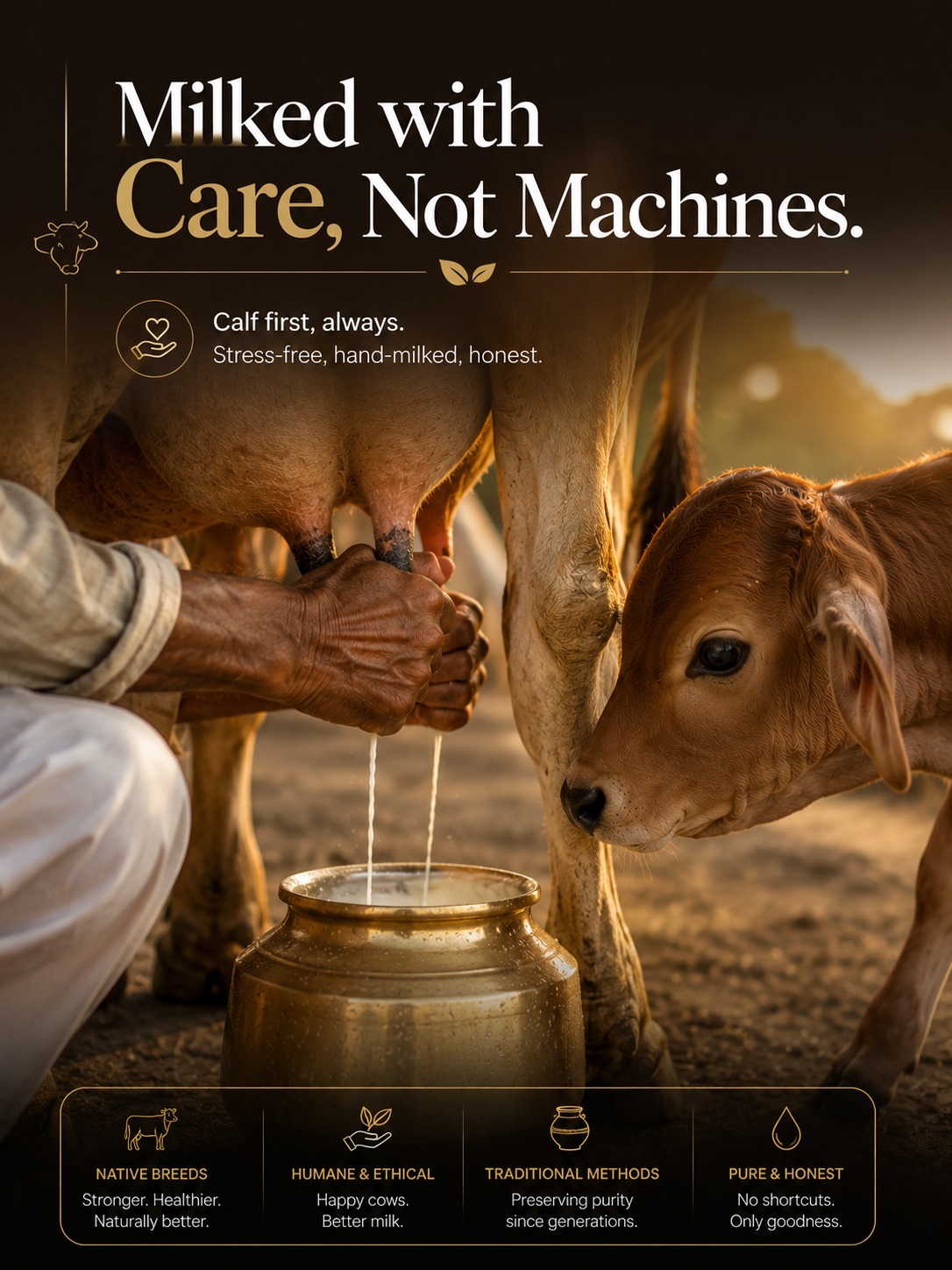
Shop our collection of premium A2 Desi Ghee made using traditional Bilona method from grass-fed indigenous cows.