
What A1 and A2 really mean, where the difference comes from, why it matters less in ghee than in milk, and what to actually look for when you buy A2 ghee.
"A2" has become one of the most popular words on ghee labels in India. But what does it actually mean – and what is "A1"? In this guide we explain the difference in plain language, without the marketing hype, so you can make your own informed choice.
First, what are A1 and A2?
Milk contains several proteins. One of the main ones is called beta-casein. It comes in different forms, and the two most common are known as A1 and A2.
The two forms are almost identical. They differ by just one building block (amino acid) in a long chain of about 200. That tiny difference changes how the protein breaks down during digestion, which is why it gets so much attention.
Which cows give A1 or A2 milk?
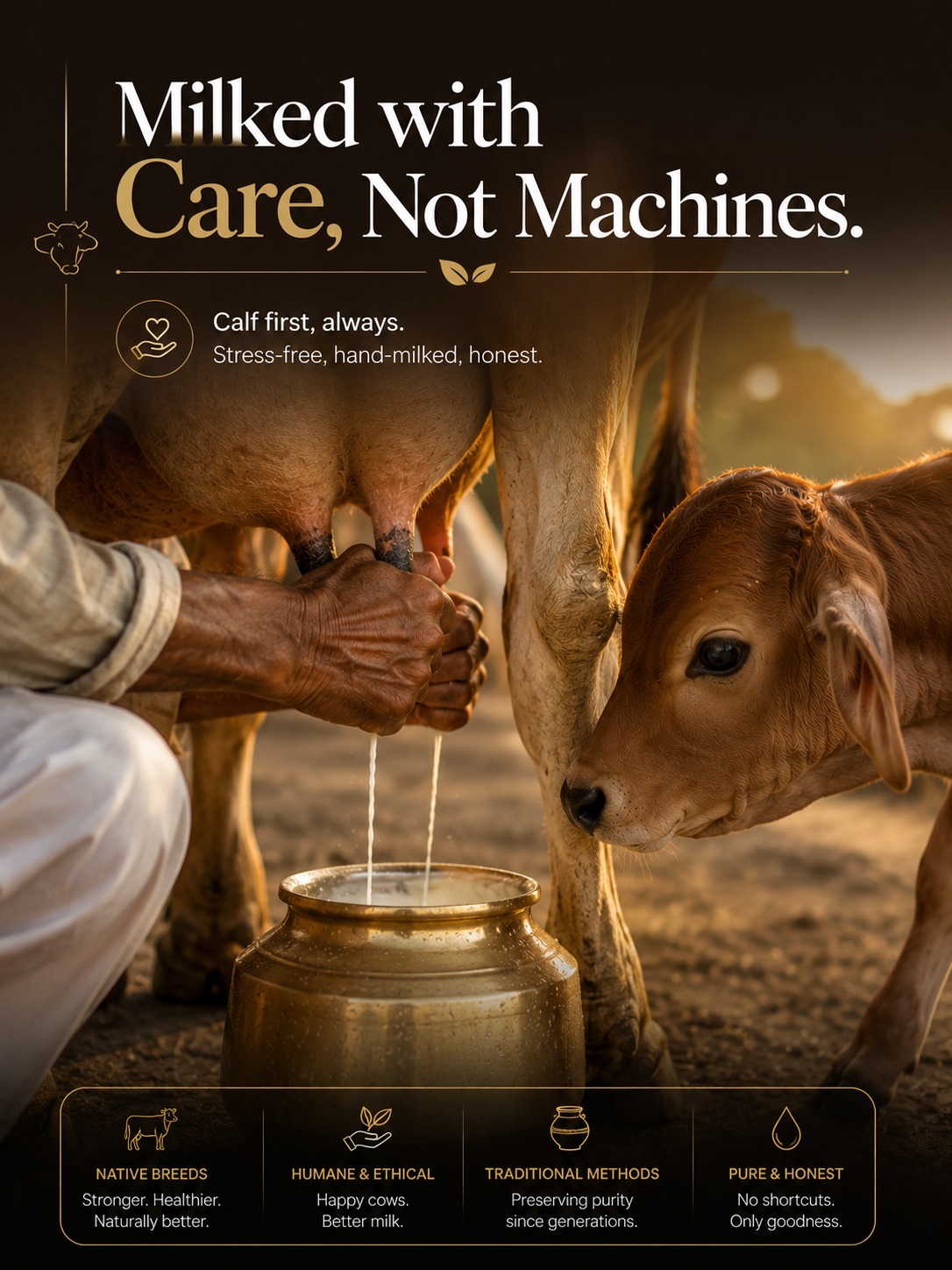
- Indigenous Indian (desi) cows naturally produce milk with A2 beta-casein.
- Many exotic and crossbred cows common in commercial dairies produce milk with A1 beta-casein, or a mix of A1 and A2.
So "A2 ghee" simply means ghee made from the milk of cows that produce A2 beta-casein – in India, that usually means desi cows.
A2 vs A1 ghee at a glance
| A2 ghee | Regular (A1/mixed) ghee | |
|---|---|---|
| Milk source | Indigenous desi cows | Usually crossbred or exotic cows, often mixed |
| Beta-casein type in the milk | A2 only | A1, or A1 + A2 |
| Common making method | Often traditional (curd-churned / Bilona) | Often cream-based, industrial |
| Price | Higher – desi cows give less milk | Lower |
| Taste and texture | Depends mainly on the making method | Depends mainly on the making method |
The honest part: ghee is mostly fat
Here's something many brands don't tell you. Ghee is almost pure milk fat. When butter is slowly cooked into ghee, the milk solids – which contain the protein – are browned and strained out. Only small traces of protein remain.
So in ghee, the A1/A2 difference is much smaller than it is in a glass of milk. For ghee, the "A2" label is really telling you about where the milk came from – indigenous desi cows – and very often about how carefully the ghee was made.
Research on A1 and A2 milk is still ongoing, and scientists haven't reached firm conclusions. That's why we don't make health promises about A2 – and you should be careful of brands that do.
Why many families still choose A2 desi cow ghee
- Tradition – desi cow ghee is what Indian kitchens have used for generations, including for puja.
- Making method – A2 ghee is often made the traditional Bilona way (curd churned into butter), which gives a richer aroma and grainy texture.
- Traceability – good A2 brands tell you exactly where their milk and ghee come from.
- Supporting desi cow rearing – choosing desi cow products helps keep indigenous cattle valuable to farmers.
How to know an "A2" ghee is genuine
- Ask about the source. A genuine brand will tell you where its cows are and how the ghee is made.
- Look for lab reports. They show the ghee is pure milk fat with nothing mixed in.
- Check the price. Desi cows give much less milk than commercial breeds, so genuine A2 ghee can't be very cheap.
- Read the label. It should name the milk source and the method, not just say "A2" in big letters.
Kalapurna A2 ghee
Kalapurna ghee is made from the milk of A2 desi cows at our own unit in Bhuj, Kutch, and every batch is lab tested – with the reports published on our website.
👉 Shop A2 desi cow ghee
👉 View our lab reports
Frequently asked questions
Is A2 ghee the same as desi ghee?
Not always. "Desi ghee" is a general word for traditional ghee and can be made from any milk. "A2 ghee" specifically means it's made from the milk of cows that produce A2 beta-casein, such as indigenous desi cows.
Is buffalo ghee A1 or A2?
Buffalo milk naturally contains the A2 type of beta-casein, which is why some brands label buffalo ghee as A2.
Why is A2 ghee more expensive?
Desi cows give far less milk per day than commercial breeds, and traditional methods like Bilona need much more milk and time per litre of ghee.
Can I tell A2 from A1 ghee by taste?
Not reliably. Taste and texture mostly come from how the ghee is made, not from the protein type.
Related Articles

Ready to experience Pure A2 Ghee?
Shop our collection of premium A2 Desi Ghee made using traditional Bilona method from grass-fed indigenous cows.